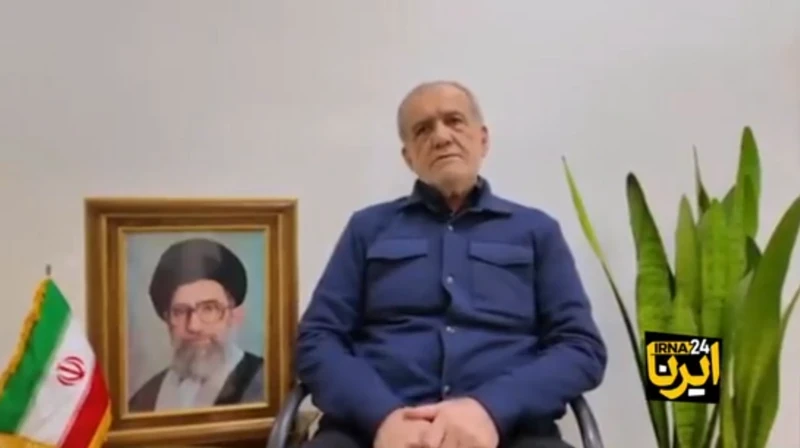
Iran’s President Masoud Pezeshkian appeared earlier in a stark, seemingly unscripted address, seated on a simple chair before a plain white wall. Beside him was a portrait of the now-deceased Supreme Leader Ayatollah Ali Khamenei – killed in the first wave of US and Israeli strikes – as well as a small Iranian desk flag and a plant.
The setting suggested urgency and pressure on Iran’s interim leadership.
As a member of Iran’s interim leadership council, Pezeshkian delivered two key messages. He rejected unconditional surrender, saying Iran would “fight to the end”.
At the same time, he apologised to neighbouring countries targeted in recent days, explaining that some strikes followed “fire at will” orders issued after the attacks began last Saturday.
He said the council had ordered the armed forces to stop targeting neighbouring states unless attacks on Iran originate from their territory.
The message has not been universally welcomed inside Iran. Some hardliners have criticised the tone as weak, reflecting a new political moment in which many senior hardline figures are gone while those in lower ranks remain uneasy about the country’s direction.
US President Donald Trump has interpreted the speech differently, saying Iran has apologised and surrendered to its neighbours.
The gap raises a question: whether this is a genuine signal of restraint, or simply an attempt by an interim leadership to buy time without being taken seriously.