Screenshot
Former Vice-President Atiku Abubakar has expressed concerns over plans by President Bola Tinubu’s administration to remove electricity subsidy from 2027.
Atiku noted that households and businesses were already struggling with high electricity costs and the removal of fuel subsidy.
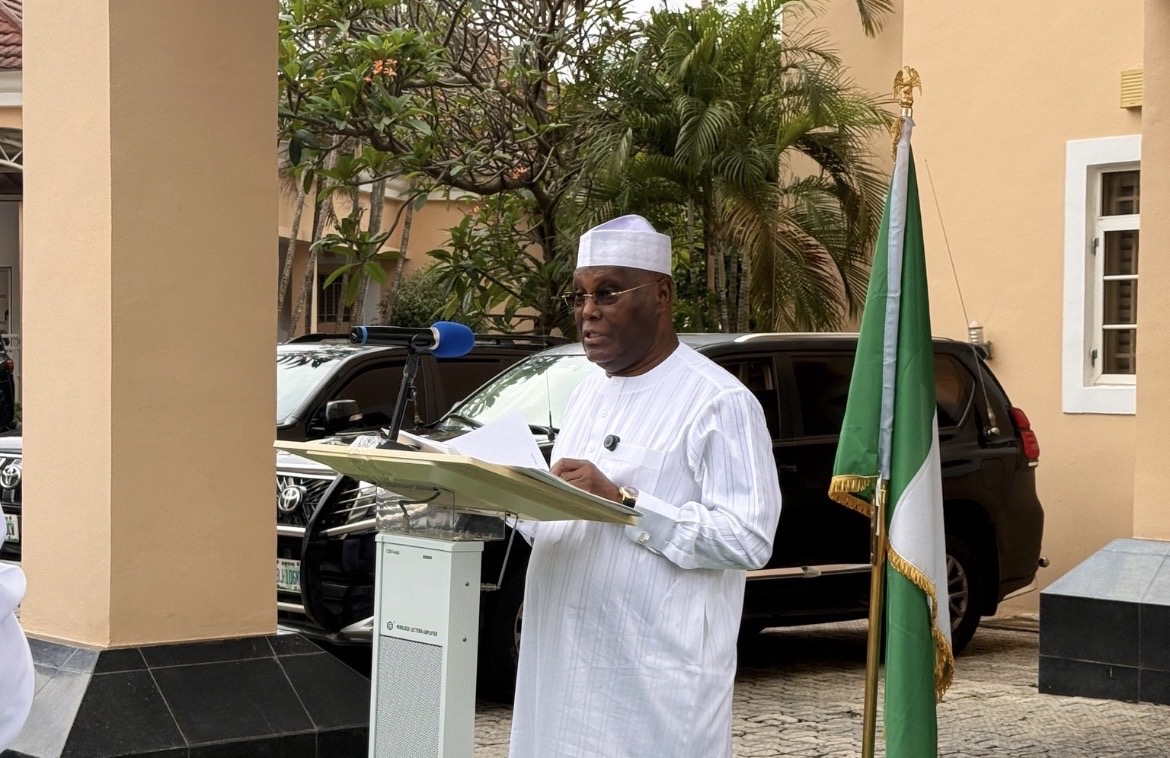
The African Democratic Congress (ADC) presidential candidate spoke at a news conference in Abuja on Friday.
He said small businesses and manufacturers were spending heavily on electricity, diesel and alternative sources of power to remain operational.
“The barber needs electricity for his clippers. The tailor needs it for her machines. The frozen-food seller needs it to preserve her stock.
“The welder needs it for his equipment. The manufacturer needs it to keep the factory alive,” he said.
Atiku said the experience with petrol subsidy removal should guide the government’s approach to electricity.
“The lesson of petrol must not be repeated with electricity. Do not remove first and think later.
“Do not impose the pain first and search for palliatives afterwards. When energy becomes unaffordable, everything becomes unaffordable,” he said.
The ADC presidential candidate asked Tinubu to use the remaining eight months of his administration to ease the burden on households, workers and businesses.
Atiku said his political contest with Tinubu should not prevent him from supporting policies that could improve Nigerians’ welfare.
“I am prepared to compete with you politically. But I will never compete with the welfare of the Nigerian people. The presidency may be contested. The wellbeing of Nigerians should never be,” he said.
Atiku said his broader economic plan was aimed at building an economy where increased production would translate into more jobs, stronger purchasing power and improved living standards.
“Nigerians do not live on statistics. They live on what their hard-earned money can buy,” he added.
He said the removal of petrol subsidy since May 29, 2023, had triggered higher transportation, food, logistics and energy costs across the country.
“When petrol becomes expensive, transportation becomes expensive. When transportation becomes expensive, food becomes expensive.
“Farmers pay more to move produce. Traders pay more to stock their shops. Workers pay more to get to work. Businesses pay more for logistics and energy.
“In the end, the Nigerian family receives the bill. When government makes energy expensive, it makes life expensive,” he said.
Atiku said he had previously advocated government intervention to reduce the price of petrol, but Tinubu dismissed the proposal as demonstrating “serious ignorance” of governance and the economy.
He said concerns raised by the Nigeria Labour Congress, petroleum marketers, manufacturers and ordinary Nigerians over rising costs should prompt the government to reconsider its approach.
“When workers, producers, marketers and ordinary families are all raising the alarm, government must listen,” he said.
Atiku said leadership required the willingness to acknowledge the consequences of policies and make adjustments where necessary.
“Leadership requires the humility to confront the consequences of policy and the courage to change course,” he said.
He urged Tinubu not to reject a policy merely because it was first proposed by a political opponent.
“Bola Tinubu should not be ashamed to do what is necessary to lower the price of petrol simply because Atiku Abubakar proposed a government intervention.
“He should just take the idea. Rename it if he wishes. And even take the credit. What matters to me is that, Nigerians pay less,” he stated.
Atiku also criticised the reliance on palliatives to cushion the impact of rising living costs, saying such interventions could not replace sound economic policy.
“And Nigerians do not need another elaborate palliative ceremony. Do not make life unbearable and then distribute bags of rice as evidence of compassion.
“Do not break a man’s legs, hand him crutches and demand applause for providing mobility,” he said.
The former vice-president said emergency assistance had its place but could not permanently compensate Nigerians for the effects of rising energy and transportation costs.
“Palliatives manage pain. Good policy addresses the source of the pain,” he said.
About the Author