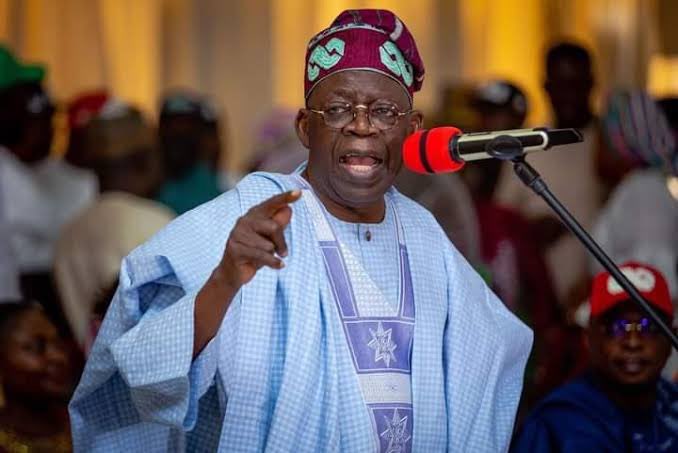
President Bola Tinubu says his administration will continue to borrow whenever necessary.
Tinubu spoke on Wednesday night at the State House during a meeting with Plateau leaders led by Caleb Mutfwang, the governor, and Nentawe Yilwatda, national chairman of the All Progressives Congress (APC).
If we have to borrow, we borrow. Borrowing is not leprosy, we just have to work hard to be able to pay for it,” the president said.
His remarks come amid rising public concern over Nigeria’s growing debt burden and the increasing share of national revenue committed to debt servicing.
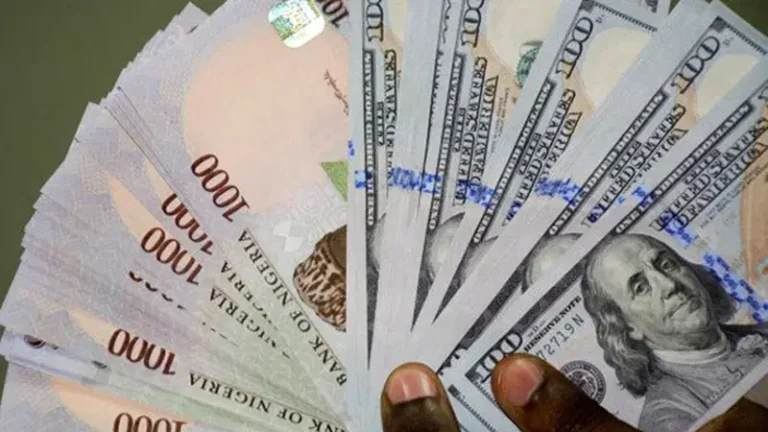
On Tuesday, the House of Representatives approved the president’s request for an additional $516.3 million external loan to fund the construction of sections of the Sokoto–Badagry Superhighway.
On March 31, Tinubu requested national assembly approval for external borrowing totalling $6 billion, including a proposed $5 billion structured financing programme from First Abu Dhabi Bank in the United Arab Emirates.
The country’s public debt consists of domestic and external debt stocks of the federal government of Nigeria (FGN) and the subnational governments — the 36 states and the Federal Capital Territory (FCT).
On April 15, the Debt Management Office (DMO) said Nigeria’s total public debt rose to N159.27 trillion at the end of the fourth quarter of 2025, up from N153.29 trillion in the previous quarter and N144.67 trillion in the corresponding period of 2024.
The figure comprises both domestic and external debts of the federal and state governments, including the Federal Capital Territory (FCT).
According to the DMO, total domestic debt stood at N84.84 trillion, while external debt was N74.42 trillion.
The federal government accounted for N80.48 trillion of domestic debt and $51.85 billion of external debt, while states and the FCT accounted for N8.15 trillion.
In March 2024, the DMO had said Nigeria’s total public debt rose to N97.34 trillion in the fourth quarter (Q4) of 2023, attributing the increase to new domestic borrowing by the federal government to partly fund the deficit in the 2024 budget as well as disbursements by multilateral and bilateral lenders.
About the Author