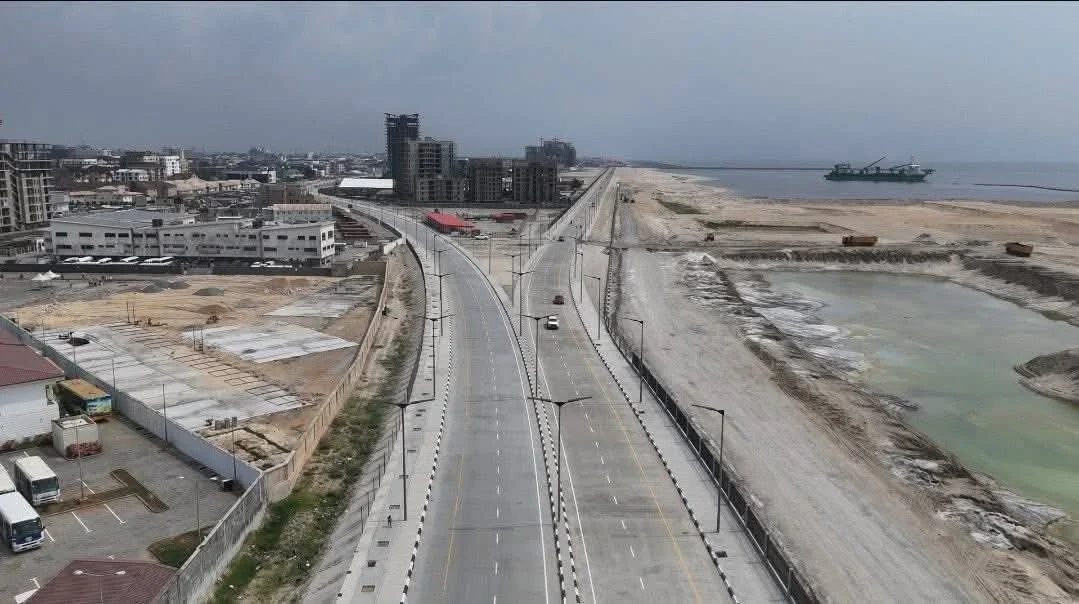
The House of Representatives has urged Federal Ministry of Works to review the proposed realignment of the Lagos-Calabar Coastal highway and retain its originally conceptualised route through Ondo, Escravos–Ogheye–Ugborodo corridor.
The resolution was passed following the adoption of a motion on the ‘Need to review the proposed realignment of the Lagos-Calabar Coastal highway and its implications for Coastal Communities,’ sponsored by Hon. Thomas Ereyitomi.
Leading the debate, Hon. Ereyitomi acknowledged the highway’s importance in strengthening coastal connectivity, facilitating interstate commerce and promoting economic development, but expressed concern that the proposed changes could undermine these objectives.
He said the government had cited swampy terrain, weak subgrades and difficult subsoil conditions as reasons for considering the realignment, warning that alternative routes should undergo independent engineering, environmental and socioeconomic assessments.
Hon. Ereyitomi particularly expressed concern that the proposed realignment could bypass riverine communities in Delta State, including the Ogheye–Orere–Ugborodo–Escravos corridor, which hosts the Chevron tank farm, Escravos Gas-to-Liquids Plant and other strategic oil and gas facilities.
He argued that retaining the original coastal route would improve access to these economic hubs, facilitate the movement of personnel and goods, and strengthen the economic benefits of the project.
The lawmaker also called for an assessment of construction costs, environmental consequences and long-term maintenance, noting that engineering solutions such as soil stabilisation, reinforced embankments and elevated viaducts could address difficult terrain.
Contributing, Hon. Ademorin Kuye urged Minister of Works to review the proposed diversion and construct reinforced coastal feeder roads to reconnect maritime and fishing communities that might be isolated by the changes.
The Lagos lawmaker also called on the ministry to invite relevant project proponents to explain the reasons for the realignment and develop alternative access routes that would minimise displacement, with clear implementation timelines.
Similarly, Hon. Inombek Abiante lamented that the proposed changes could deny his constituents the benefits of the highway, questioning whether difficult terrain would have been accepted as a barrier if crude oil extraction were involved.
“People have always asked us: if crude oil were found in those areas, would they say the terrain was difficult? I have not had an answer to that question,” he said.
Hon. Abiante also demanded that the professor reportedly proposing the realignment appear before the House to explain the technical reasons behind the decision. He further complained that an Environmental Impact Assessment (EIA) had not been made available to his constituency.
However, Deputy Speaker, Hon. Benjamin Kalu, urged Hon. Abiante to withdraw his expression of no confidence in the House Committee on Works, stressing the need for members to respect the institution’s committees while seeking further scrutiny of the project.
Hon. Abiante subsequently called for broader consultations, insisting that affected communities should participate in discussions on the proposed changes.
“If this is indeed a coastal road intended to benefit me and my people, I do not want the realignment. I also do not want the decision to be left in the hands of a few people. I want all of us to be involved,” he said.
Also contributing, Hon. Mark Essiet urged the Ministry of Works to submit the project’s EIA to the House, noting that the document would help lawmakers understand the environmental challenges and proposed mitigation measures.
“This will go a long way towards resolving the problem and preventing a recurrence, because before embarking on any construction work, there must be an EIA,” Hon. Essiet said.
Consequently, the House urged Federal Ministry of Works to review the proposed realignment and retain the original Lagos-Calabar Coastal Highway route through the Ondo, Escravos–Ogheye–Ugborodo corridor, while ensuring that engineering feasibility, environmental sustainability and the interests of affected coastal communities were adequately addressed.
About the Author