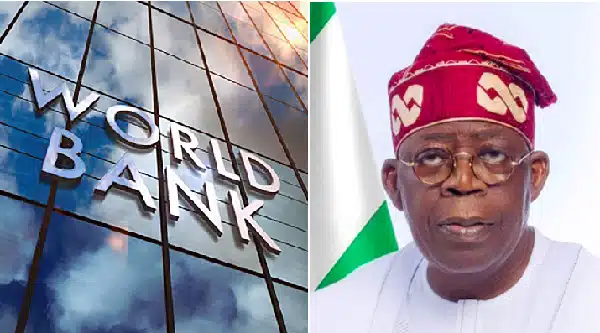
The Federal Government is seeking a fresh $1.25 billion loan from the World Bank to support economic reforms, job creation, and investment growth.
Findings showed that the facility has reached a critical stage in the lender’s approval process.
The borrower is listed as the Federal Republic of Nigeria, while the Federal Ministry of Finance will serve as the implementing agency.
The facility, titled Nigeria Actions for Investment and Jobs Acceleration, is expected to be presented for approval on June 26, 2026.
If approved, the loan, estimated at about ₦1.7 trillion, would be one of the largest World Bank facilities secured under President Bola Tinubu’s administration and could push Nigeria’s total debt above ₦160 trillion.
According to the World Bank document, the facility is designed “to support the government’s efforts to expand access to finance, digital, and electricity services, and strengthen competitiveness through tax, trade, and agriculture reforms.”
The report showed that the loan has reached the “decision meeting stage” of the World Bank approval process, indicating that negotiations and major conditions have largely been concluded ahead of final board approval.
“The review did authorise the team to appraise and negotiate,” the document added.
Findings revealed that the World Bank has approved about $9.35 billion in loans and credits for Nigeria from June 2023 to May 2026.
The loans cut across sectors including power, education, healthcare, agriculture and economic reforms.
If the World Bank approve the latest facility, the total approvals under Tinubu could rise to about $10.6 billion.
Earlier, the Accountant-General of the Federation, Shamseldeen Ogunjimi, warned that Nigeria may reject loan facilities from the World Bank if delays in approval and disbursement persist.
Ogunjimi’s warning was contained in a press statement last week by the Director of Press and Public Relations at the Office of the Accountant-General of the Federation, Bawa Mokwa.
He argued that saying prolonged timelines could undermine the country’s willingness to proceed with such arrangements.
However, the World Bank noted that the programme carries significant risks ahead of the 2027 general elections.
About the Author