
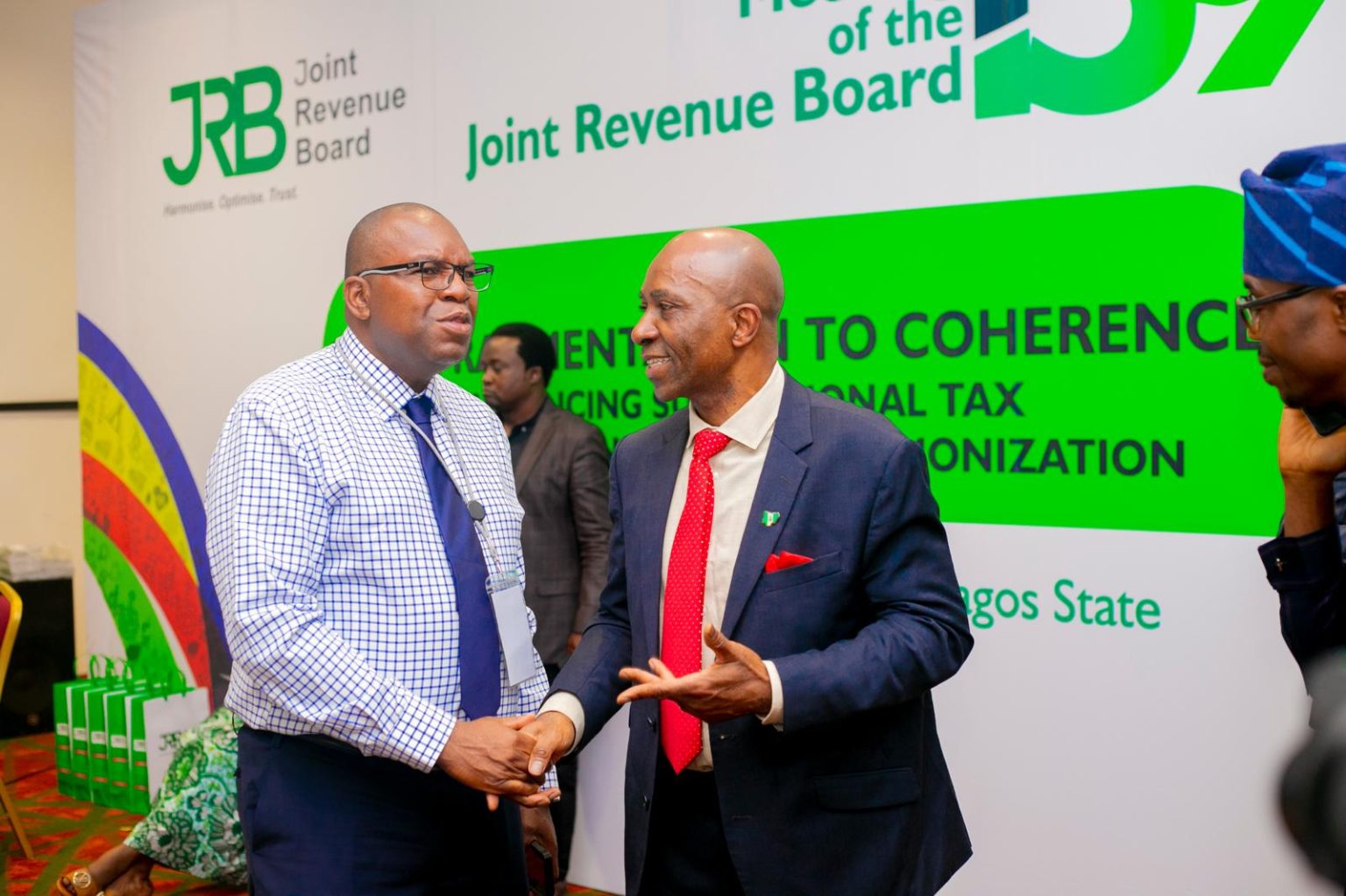
Nigeria’s Tax Ombudsman and Chief Executive of the Office of the Tax Ombudsman, John Nwabueze, has reassured tax and revenue agencies of his commitment to collaborate with institutions at the national and sub-national levels to achieve improved operational efficiency.
A statement released on Thursday by the Chief Press Secretary of the Tax Ombudsman, Chukwudi Achife, said Nwabueze gave the assurance at the 159th meeting of the Joint Revenue Board (JRB), held in Lagos.
The JRB comprises the revenue boards of 36 states, the Federal Capital Territory Revenue Service (FCTRS), and some tax and revenue-generating agencies in the country.
Speaking on the topic, “The Role of the Tax Ombudsman in Facilitating Dispute Resolution and Strengthening Trust in the Tax System in the Context of Emerging Tax Reforms,” Nwabueze noted that the Office of the Tax Ombudsman represents one of the most significant institutional innovations in Nigeria in recent times.
He explained that the Office was established as an independent and impartial body to protect taxpayers’ rights and promote administrative justice in the tax and revenue framework.
He added that the Office functions as a bridge between taxpayers and revenue authorities, receiving and investigating complaints from taxpayers and facilitating resolution through mediation and conciliation.
Noting that these mechanisms are faster, more cost-effective, and less adversarial alternatives to litigation, the Tax Ombudsman said the Office also plays a systemic role in identifying recurring issues in tax and revenue administration and recommending reforms to improve efficiency, fairness, and transparency.
According to him, the Office builds public trust by serving as an independent, neutral platform to resolve taxpayer grievances without the high cost of litigation.
Functions of the Tax Ombudsman include impartial mediation, a watchdog role against arbitrary fiscal policies, taxpayer rights education, accountability mechanisms, and systemic improvement.
However, Nwabueze emphasised that the Office of the Tax Ombudsman “does not determine tax liability, nor does it replace the courts or the Tax Appeal Tribunal.” Rather, according to him, it is “focused on ensuring that tax administration is conducted in a fair, transparent, and accountable manner.”
“The Office of the Tax Ombudsman (OTO) is a bold and progressive effort to harmonise revenue systems, expand the tax base, and improve compliance,” he added.
Noting that all reforms inevitably come with challenges, Nwabueze said the Office plays a critical role in smoothing friction points in the new tax regime, ensuring confidence and compliance, and supporting revenue authorities in improving operational efficiency.
“The OTO helps to ensure that compliance with the new tax laws is driven not by fear or coercion, but by trust and understanding,” Nwabueze explained.
He called for collaboration and partnership between the Office and tax authorities, noting that Nigeria’s revenue administration depends on the seamless integration of all tax and revenue components, with the OTO as a critical pillar in the ecosystem.
Nwabueze urged all revenue-generating agencies at the federal, state, and local government levels to prioritise inclusion by integrating the OTO into national and sub-national tax engagements and policy dialogues.
About the Author