
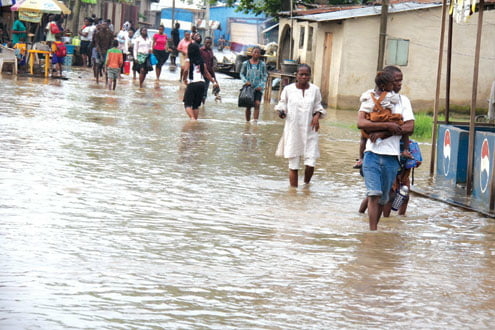
The Nigerian Meteorological Agency(NiMet) has issued a fresh flash flood warning for 26 states and the Federal Capital Territory(FCT).
This is contained in the NiMet’s Probable Flash Flood Risk Map for the Second Dekad, July 11– July 20, 2026 made available to reporters on Sunday.
The agency placed Bauchi, Lagos, Ondo, Jigawa, Taraba, Adamawa, Ekiti, Plateau, Benue, Nasarawa, and Kogi among the states at high risk of flooding between July 11 and July 20, 2026.
Other states identified as vulnerable include Kwara, Oyo, Ogun, Osun, Delta, Edo, Abia, Imo, Ebonyi, Enugu, Akwa Ibom, Cross River, Rivers, and Bayelsa, as well as the Federal Capital Territory.
According to to the agency, the heightened flood risk is due to persistent rainfall currently being recorded across the nation.
NiMet said the flooding left soils across many parts of the country fully saturated and unable to absorb additional rainwater.
The agency explained that the combination of continuous rainfall and already waterlogged ground conditions is expected to trigger widespread flash floods.
It expressed worries particularly in low-lying communities, urban centres, and areas with poor drainage systems.
Beyond physical destruction, NiMet noted that stagnant floodwaters may increase the spread of waterborne diseases due to poor sanitary conditions in affected communities.
To minimise the impact, the agency urged residents to pay close attention to weather updates and flood advisories while taking proactive measures to safeguard lives and property before heavy rainfall.
It also called on State Emergency Management Agencies (SEMAs) to strengthen preparedness and emergency response in partnership with the National Emergency Management Agency (NEMA) and other relevant organisations.
The agency further advised communities to keep drains, culverts and waterways free of refuse to allow the free flow of storm water and reduce the risk of urban flooding.
The latest advisory comes amid growing concerns over recurring flood incidents across the country, with experts linking the increasing frequency of flash floods to climate change, intense rainfall and inadequate drainage infrastructure.
About the Author