Opposition political parties have agreed to present a single presidential candidate for the 2027 general election.
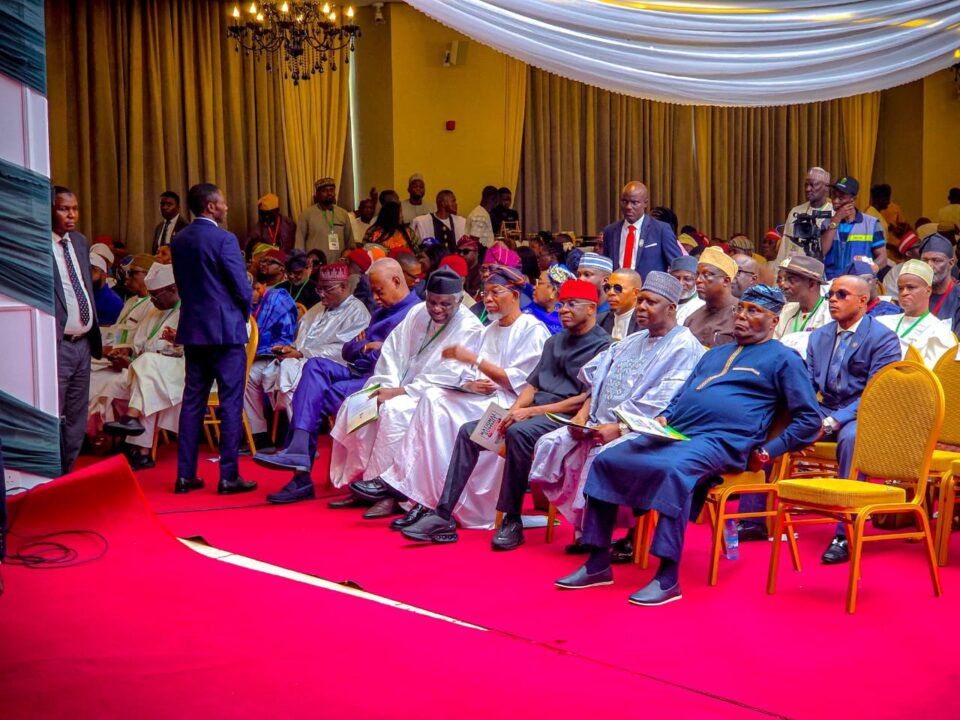
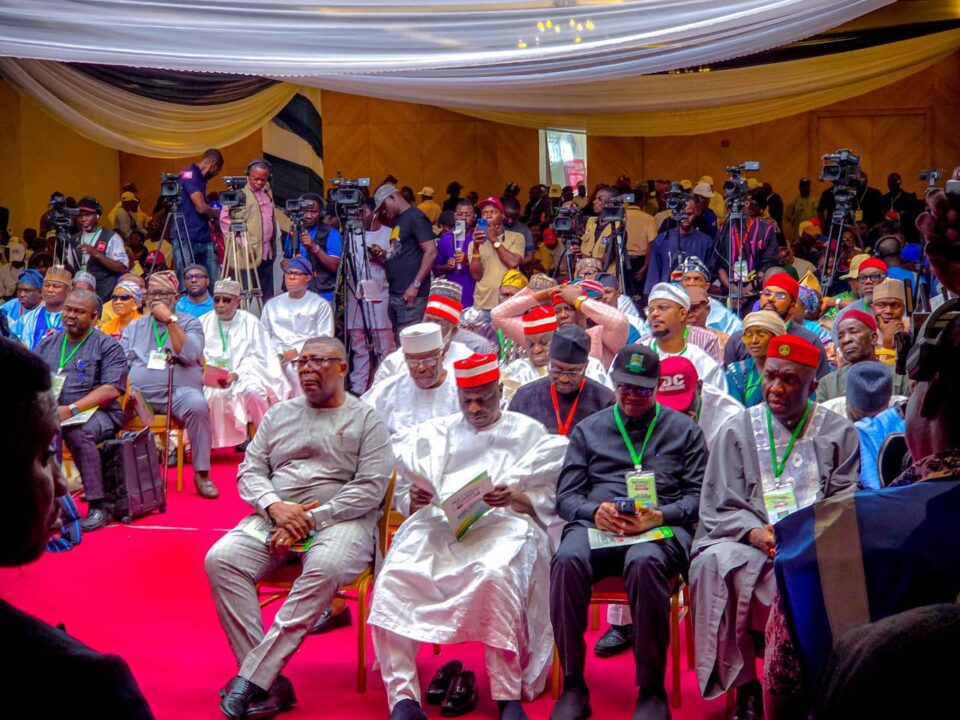
The resolution was adopted on Saturday at the national summit of the opposition political party leaders held in Ibadan, Oyo state.
Thefrontranl reports that former vice president, Atiku Abubakar, Rotimi Amaechi, Rabiu Kwankwaso and other top leaders were present at the event.
Officials of the Peoples Democratic Party, PDP faction backed by the Oyo State Governor, Seyi Makinde were also in the meeting.
A factional National Chairman of the Peoples Democratic Party, Kabiru Tanimu-Turaki, announced that opposition political parties in Nigeria have agreed to field a single presidential candidate for the 2027 general elections.
Turaki added that opposition parties had resolved to work together to present a single presidential candidate for the elections.
“Three, that we shall work towards fielding one presidential candidate for the 2027 elections. We shall be agreed and supported by all participating opposition parties to rescue our nation and our long-suffering masses,” he said.
The opposition leaders also called for the resignation of the Chairman of the Independent National Electoral Commission, Professor Joash Ojo Amupitan, accusing him of alleged bias in favour of the ruling All Progressives Congress.
They argued that his continued stay in office could undermine public confidence in the electoral process and potentially trigger political tensions ahead of the 2027 elections.
“INEC Chairman, Professor Joash Ojo Amupitan, having shown bias and open partisanship in favour of the ruling APC, should not conduct the 2027 general election as Nigerians across the board have lost confidence in him and his capacity to guarantee the required neutrality to deliver a free, fair, transparent, and credible election.
“His continued stay in office is vexatious and capable of triggering widespread crises in our nation.”
The summit, which also featured prominent opposition leaders including former Senate President David Mark, centered on calls for unity among opposition parties, electoral reforms, and what participants described as the need to “rescue Nigeria” from worsening economic and security challenges.
About the Author