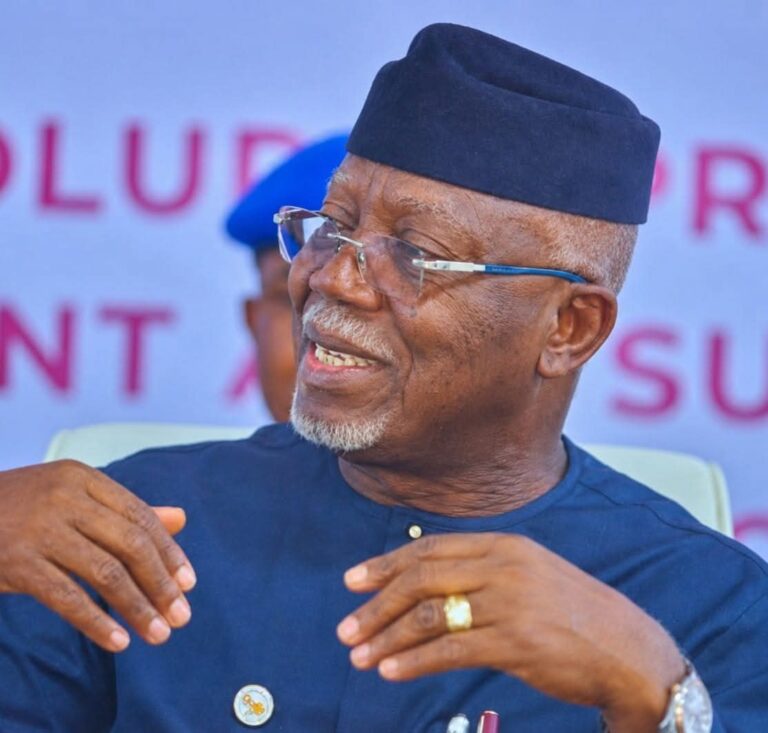

How APC primaries confirmed the limit of Aiyedatiwa’s political influence
By Wale Obanigba, Esq.
The outcome of the APC National Assembly primaries in Ondo State has confirmed what I argued in earlier articles. Governor Lucky Aiyedatiwa’s political influence within the party is far more limited than many of his loyalists anticipated.
Long before the primaries, I noted that the Governor’s approach to internal party management was alienating key stakeholders and breeding resistance within the APC. Rather than consolidating support through consultation and inclusion, the administration appeared to rely more on political dominance. The primaries have now validated those concerns.
Across several constituencies, many of the Governor’s preferred aspirants either failed to secure the party’s ticket or were not cleared by the party to contest before the primary election. Even in cases where candidates linked to Government House emerged, the process was marred by disputes and allegations of irregularities. Instead of demonstrating overwhelming control, the exercise exposed the intense contestation now defining APC politics in Ondo State. The national leadership of the party has since nullified the flawed process, based on results trending in the public space.
Beyond the internal party fallout, the primaries revealed a deeper limitation at the national level. The reality is that Governor Lucky Aiyedatiwa has not consolidated the confidence of the current political arrangement at the centre to dominate Ondo State politics. His conduct during the primary election further reinforced that perception within key party circles at the national level.
The conclusion, therefore, is clear, the Governor could not single-handedly determine the outcome of the APC primaries in Ondo State, especially those involving contests for National Assembly seats.
Perhaps the greatest irony is that he helped build the coalition that ultimately limited his own influence. By fighting multiple political battles simultaneously and confronting several influential blocs within the party, he inadvertently united interests that would ordinarily not have aligned. Aspirants, federal lawmakers, ministers, party leaders, and grassroots stakeholders increasingly found common cause in resisting what many perceived as an attempt to centralise political control.
Another factor that weakened the Governor’s standing is his relationship with the political family of the late Governor Oluwarotimi Akeredolu, SAN. Without Akeredolu, Aiyedatiwa would not have become Deputy Governor and, by extension, Governor. Yet there is a growing perception that many loyalists of the late Governor, a political family of which Aiyedatiwa himself was a product have been alienated from the government. Many of those who deployed their resources to ensure Akeredolu’s victory in the highly contested 2020 governorship election are the same stakeholders from whom Aiyedatiwa is now estranged, even though he remains the sole direct beneficiary of that victory today.
Most of the current members of the National Assembly, many of whom belong to the Akeredolu political family, were among those Aiyedatiwa sought to remove at all costs. Likewise, many members of the State House of Assembly were not returned under his leadership. This has been perceived by the Akeredolu camp as a direct political confrontation, further deepening discontent within the party.
Equally significant is the role of the Governor’s inner circle. There is a growing view that some of those closest to him lack strong grassroots influence and have worsened divisions by engaging in avoidable conflicts with party stakeholders in the Governor’s name instead of building bridges. Many of them are pursuing personal battles to dominate party affairs in their respective localities under the guise of acting on behalf of the Governor.
Against this backdrop, another political reality has become harder to ignore. The emergence of Hon. Olubunmi Tunji-Ojo as a rallying point for stakeholders alienated by the Governor’s style of leadership. As relationship between Government House and several ministers, National Assembly members, party leaders, and other influential actors deteriorated, many gradually found common ground around the Minister of Interior. What began as isolated grievances evolved into a coordinated political tendency, with Tunji-Ojo increasingly recognised as the leader of what is now referred to in political circles as the “Abuja group.”
The significance of this development extends beyond the Minister’s federal office. His growing influence appears to stem from his ability to build relationships, his political dexterity, his capacity to inspire confidence, accommodate diverse political interests, and, most importantly, provide the necessary resources. Stakeholders who might otherwise have pursued separate ambitions increasingly rallied around a shared platform that challenged the concentration of power in Government House. The outcome of the primaries has reinforced the perception that the Abuja group is now a formidable centre of influence within the Ondo APC. Olubunmi Tunji-Ojo’s influence now extends beyond the APC as a political party to major segments of the political landscape in Ondo State.
This does not mean Governor Aiyedatiwa has become politically irrelevant. As the sitting Governor, he still wields considerable constitutional authority and controls important state structures. However, the primaries have shown that institutional power alone cannot replace consultation, inclusion, coalition-building, and effective alliance management.
The APC primaries have drawn a clear line between holding political office and exercising unquestioned political influence. Governor Aiyedatiwa remains the leader of the APC in Ondo State by virtue of his office, but the events surrounding the primaries suggest that the party’s direction can no longer be dictated from Government House alone. The emergence of the Abuja group under Olubunmi Tunji-Ojo has altered the balance of power within the Ondo APC, making coalition-building, rather than unilateral control, the defining feature of the state’s politics going forward.
Wale Obanigba, Esq., is a legal practitioner based in Akure.
About the Author