
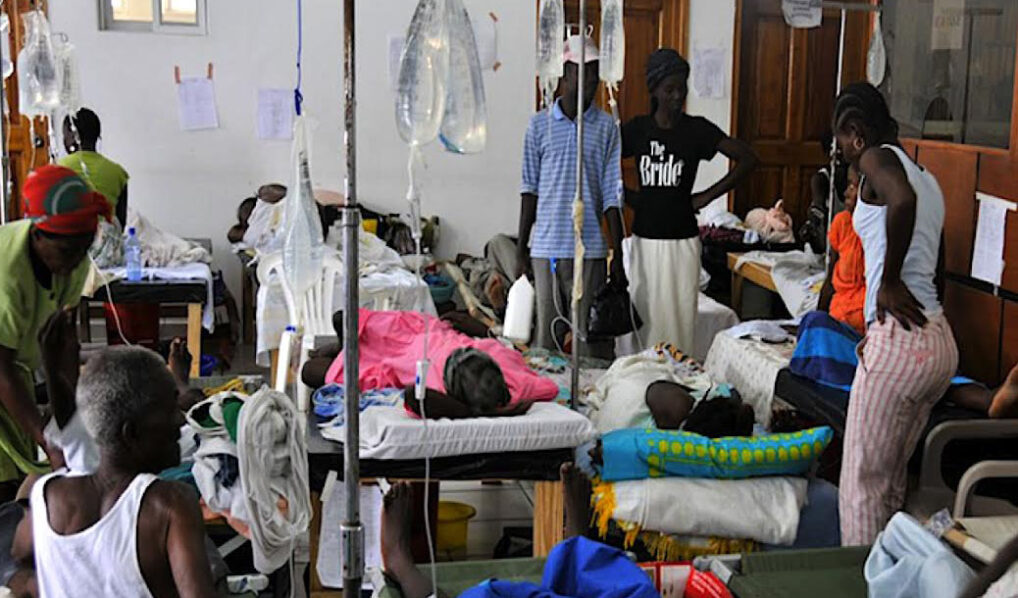
Patients across public hospitals in Ondo State are facing severe healthcare disruptions due to lack of essential drugs and staff shortages.
The crippling shortage of healthcare professionals and essential medications has left vulnerable patients agonizing for hours in overcrowded waiting rooms and struggling with exorbitant out-of-pocket costs for basic treatments.
They claimed that shortages of health workers and drugs were affecting medical services in hospitals in the state and appealed to the state government to tackle severe manpower shortages and high medication costs in order to save more lives. In most cases, pregnant women were required to provide delivery kits and other consumables used during treatment.
Investigations by Thefrontrank revealed that most Specialists Hospitals and General Hospitals in the state are experiencing acute shortage of health professionals, dearth of facilities and dilapidated structures.
Many of the hospitals lacked specialist doctors, including neurosurgeons, cardiologists, urologists and oncologists, while many of these professionals have left the state due to poor remuneration and conditions of service, primarily working environment.
The few available health professionals are overworked and underpaid, thereby discouraging them from working in public hospitals.
Investigation revealed that state hospitals in Akure, Ondo town, Okitipupa, Owo, Ore, Ikare Akoko, Igbokoda among others are facing the same challenges with many still maintaining aging structures.
Mr Julius Adegoroye, a patient at the Specialist Hospital, Okitipupa, noted that the hospital is facing a severe workforce crisis, rendering the patients vulnerable at all times.
“It is unfortunate that few doctors and nurses are attending to lots of patients. Many of the patients are in serious pains and need attention but the shortage of health workers is affecting the hospital’s services,” he said.
Another patient, Mrs Iyabo Akinugba, lamented that the rising cost of medications outside hospitals is a major crisis which often lead to an increase in non-adherence, worsened health conditions, and in some tragic cases, fatalities.
“After attending to you, they ask you to buy drugs from pharmacies outside the hospital which are very expensive and this is really taking a toll on patients.
“This is a government hospital and this is the place for the common man. Although nobody prays to be sick but it’s inevitable. I appeal to the government to restore this facility back to its former years for citizens to enjoy its free healthcare services,” she said.
At the Oba-Ile Basic Centre, patients are paying as high as N27,500 for the treatment of malaria and N1,000 for treatment card.
A patient, who simply identified himself as Isaiah, lamented that patients are facing severe financial strain from malaria care, saying that out-of-pocket costs at primary health centres and state hospitals far exceed intended subsidized rates, pushing many into poverty.
“It is because I can afford the cost, how about the people who can not afford it, that mean they will return home quietly with many of them losing their lives. This is the sad reality in our state presently,” he said.
A health professional said that the doctor-to-patient ratio was about 30 to one, describing the workload on medical personnel as excessive.
He lamented that low morale was negatively affecting productivity in public hospitals in the state, while poor maintenance of diagnostic equipment often leads to breakdowns.
“The government should ensure proper remuneration, curb corruption and guarantee that equipment is maintained by qualified personnel,” he said.
Some of the patients and health workers emphasised the need for commitment to global best practices in healthcare delivery in the state through improved facilities, skilled personnel and patient-centred care.
Efforts to get government reaction on the situation in public hospitals were unsuccessful as of the time of filling thìs report.
About the Author